
- This event has passed.
Micol Long will present her SenSArt research in an international online seminar on The Cultural History of Higher Learning
March 11 @ 1:30 pm - 2:30 pm
Internationale online seminar on The Cultural History of Higher Learning
- March 2026
Online link: https://lu-se.zoom.us/j/2108272169
Time: 13.15 – 14-30 CET
This online seminar is hosted by the Lund Centre for the History of Knowledge (LUCK). LUCK is a scholarly centre devoted to developing and facilitating the history of knowledge. It brings together some fifteen researchers in Lund and has extensive global networks. LUCK is a forum that stimulates new research and collaboration through research projects, publications, a seminar series, a visiting fellowship programme, a summer school, etc.
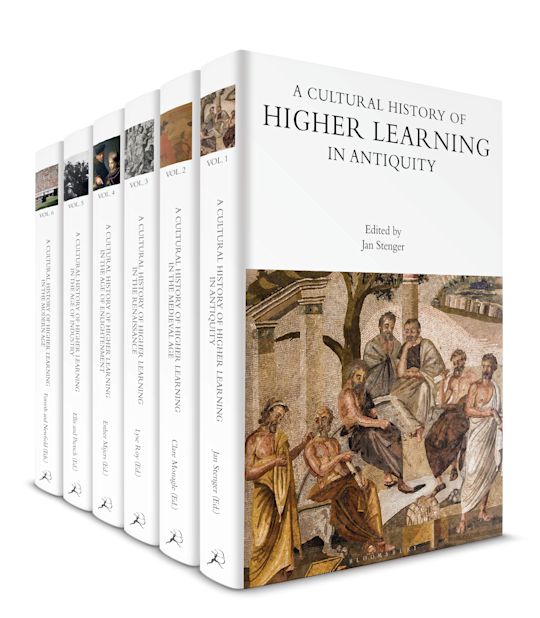
The seminar will introduce and celebrate the publication of the six volume A cultural history of higher learning by Bloomsbury. The volumes ask how has higher learning been shaped by people, ideas and knowledge? The volumes span 2,500 years, 67 experts from six continents chart across the social and cultural dynamics of higher learning and education across the centuries. Professor Johan Östling, LUCK has contributed with a chapter on Disciplines in Volume 6, while Professor Ning de Coninck-Smith, Aarhus University has served as an anthology editor together with Professor William Whyte, Oxford University and Professor Julia Horne, University of Sydney
Exploring higher learning rather than universities, the authors examine the full range of the effects of advanced education on their societies. Readers will discover ancient academies, monasteries, temples to professional and technical schools as well as universities. Together the volumes describe the remarkable drama of societies trying to organize knowledge for humanity, with many conflicts, reversals, and triumphs along the way.
The set is organized thematically and chronologically across six volumes so readers can follow long‑term continuities and period‑specific changes in higher learning. The series emphasizes social and cultural contexts—how elites, religious institutions, professions, and states shaped curricula, pedagogy, and the public role of advanced education. The editors frame higher learning broadly to include non‑university forms of advanced instruction as well as the familiar medieval and modern university models
The volumes are structured around eight themes: Cultures, Geographies, Authorities, Teaching, Disciplines, Communities, Materialities, Contestations and an Epitome, catching and twisting like a prism the themes of the volume. The idea is to facilitate cross-volume reading.
The online seminar will open with two short presentations by Ning de Coninck-Smith, describing the overall idea, and Senior Lecturer in History of Education at the University of Sheffield, Heather Ellis about editing together with Associate professor Tamson Pietsch, University of Technology Sydney volume 5, A cultural history of Higher Learning in the Age of Industry.
Then follows two longer presentations. One by associate professor Micol Long, University of Milan, Italy, who has contributed to a chapter in volume 2 about Monastic Perceptions of Discipline in the Long Twelfth Century; Second comes lecturer Samuel Rutherford, University of Glasgow, Scotland, UK. He has contributed to volume 5 with a chapter on Contestations about domestic sciences and women’s right to education around 1900.